





How to extend the life of your clothes: Linen takes centre stage
Aug 11, 2024
The answer to the question of why we’ve included linen in the BUSHMAN collection is simple: there are few natural materials with a similar tradition. Linen is as pure as fabrics can be. What's more, it offers benefits that few other materials can match. And caring for it is a breeze – all you need to do is learn a few basic tips...

The oldest piece of linen cloth found comes from Turkey (approx. 7000 BC), but the oldest archaeological finds – seeds of this plant – come from Iran and date back to around 7500 BC. Even today, growing flax requires specific processes, such as manual weeding, making it a truly traditional plant in every sense.
Flax has been grown in the Czech Republic and Slovakia since time immemorial, probably since the beginning of the 4th century. The reason was simple. Linen cloth was strong, could withstand heavy loads, sweat, and work in the sun, while also providing pleasant cooling and excellent sweat absorption. Linen has retained these properties to this day, which is why it has a place of honor in the BUSHMAN collections.
The advantages of linen at a glance:
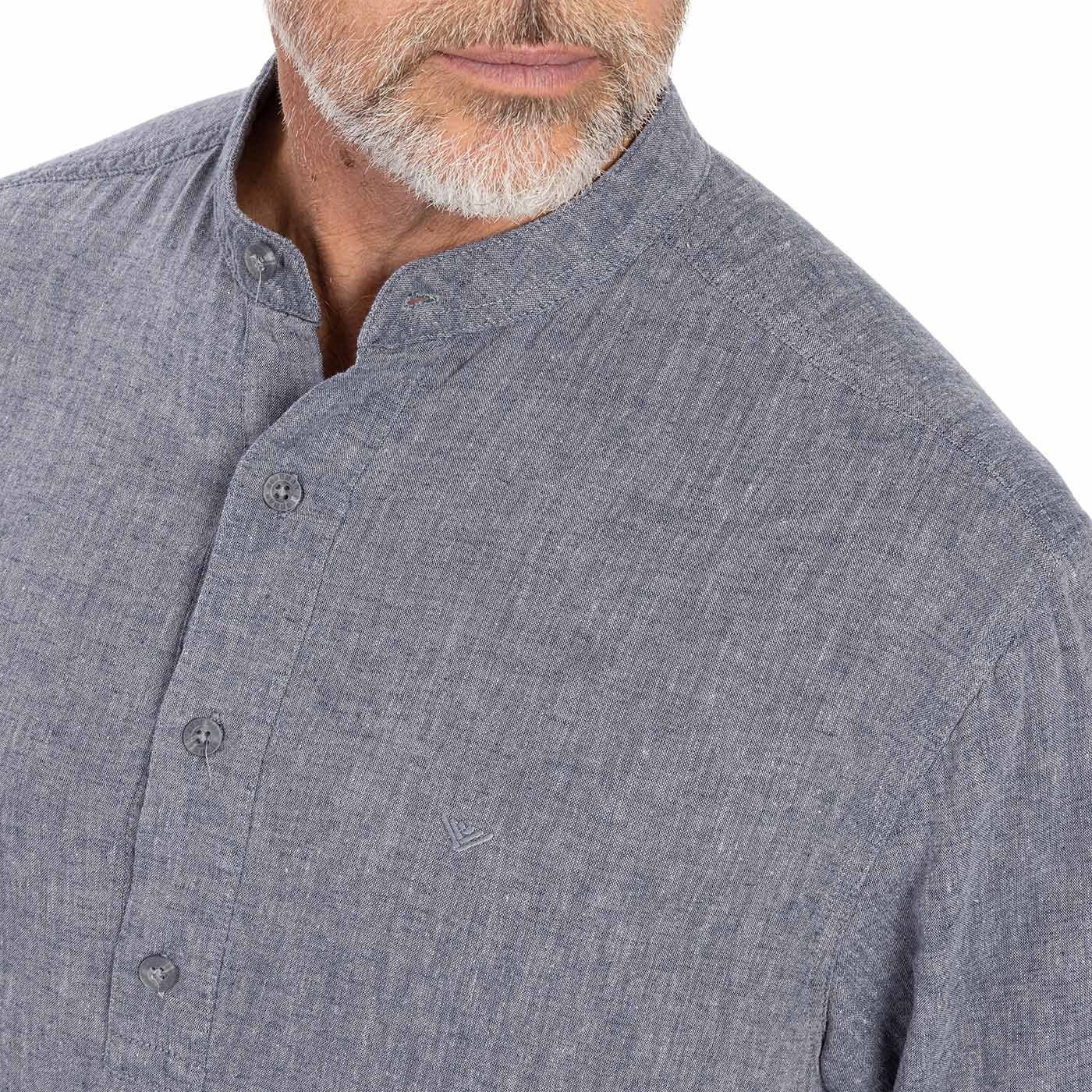 • strong fibres, long life,
• ideal for wearing on hot days,
• but its thermal conductivity also comes in handy in cold weather,
• 30% stronger than cotton, one of the strongest natural fibres,
• hypoallergenic,
• it absorbs sweat well and neutralizes odors (thanks to its microphobic effect),
• ... and we bet you didn't know that it can reflect ultraviolet radiation!
The natural shades of linen are: beige, brown, ivory, and grey.
It wrinkles. So what!
Linen clothing tends to wrinkle significantly. However, this is not a problem, but a natural attribute of this fibre. Let's learn to respect it and not to look for flaws where there are none. After all, with the right washing, hanging, and storage methods, wrinkling can be largely prevented. How? Read on!
How to wash linen clothing?
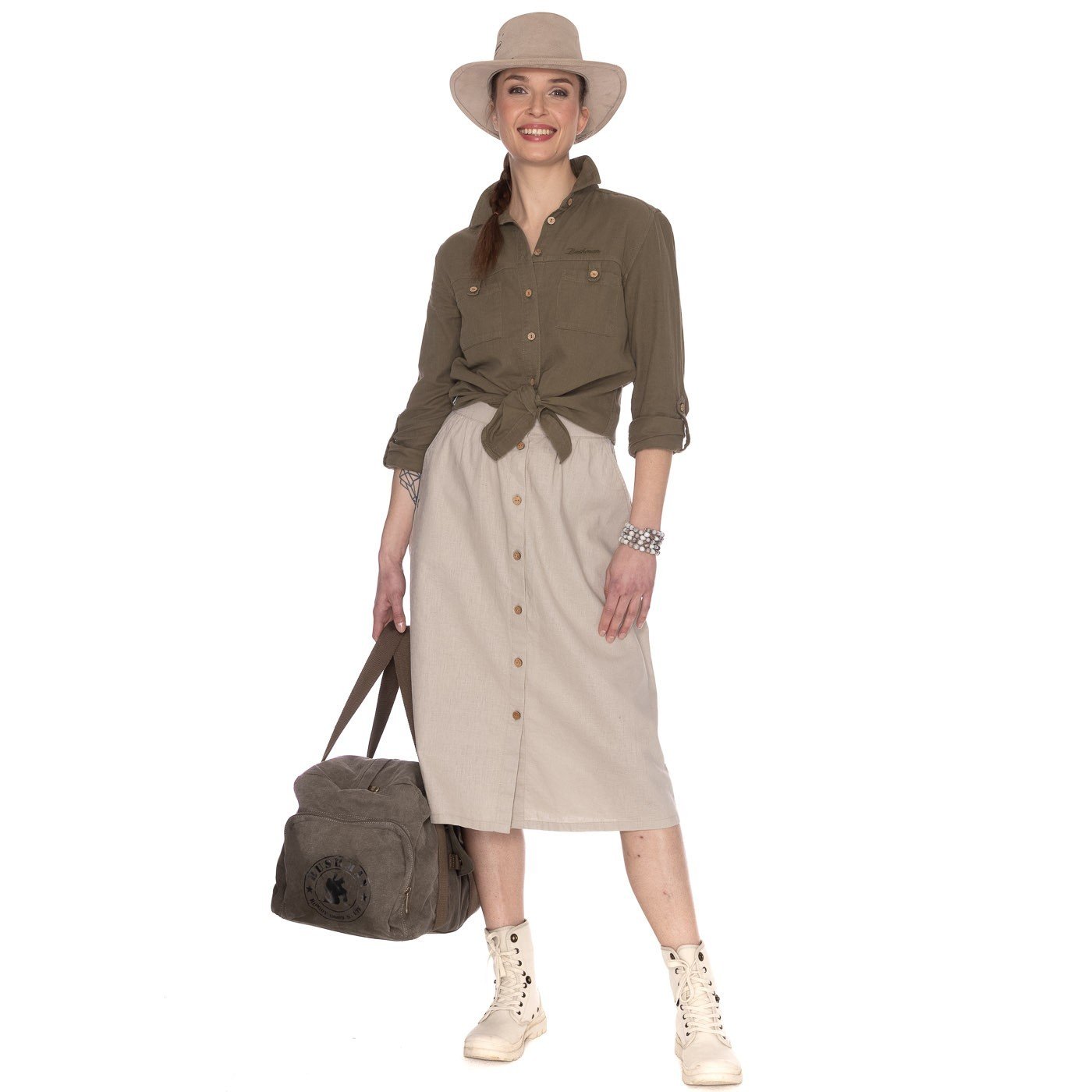 BUSHMAN has included clothing with more than half linen in its collections. The remaining percentage is cotton – just the way you like it. If linen is the predominant material, treat it as pure linen clothing:
 - Linen clothing loves hand-washing.
- If you put it in the washing machine, always choose a gentle cycle at a maximum temperature of 40°C. Are you afraid that the dirt won't come out easily? You're wrong! Linen clothing releases dirt very easily, so you really don't have to worry about it not being washed properly...
- You can also extend the life of your linen clothing by washing it inside out and not together with synthetic materials.
- Washing softens linen fibres, but does not reduce their strength. However, they definitely do not get along with fabric softeners and bleaching agents. Eco-friendly powders or soap flakes are the number one choice!
- We gave you a tip on how to fill your washing machine efficiently in the article Fabric Care, or Do We Really Know How to Do Laundry? In the case of linen clothing, you can be more economical and fill the washing machine a little less—linen absorbs a large amount of water. And if you want to do your clothes a real favor, soak them in lukewarm water before washing and put them in the washing machine wet. They won't wrinkle as much.
How to dry linen clothes?
Rule number one is: REDUCE THE SPIN CYCLE to a minimum to avoid damaging the fibres. Even intense hand wringing can damage linen clothes in the long run. It is equally important not to put linen clothes in the dryer. Our grandmothers used to spread their laundry on clean grass and let it dry in the sun, or even better, in partial shade. If you have the space, follow in their footsteps and dry your laundry outside. It will dry thoroughly and absorb the scent of fresh air. If you dry your laundry on a drying rack or clothesline, hang it up straight and avoid any creases.SOME GOOD ADVICE: Remove all clothing (especially linen) from the washing machine as soon as the wash cycle ends. This will prevent the fabric from becoming musty and wrinkled!
To iron or not to iron?
As we have already mentioned, the creasability of linen is not a disadvantage, but one of the characteristics of this fiber. Therefore, you do not need to iron linen clothing, especially if you have taken the trouble to hang it up properly. However, if you do decide to iron it, a steam iron will do the job well – ideally while the garment is still damp. Alternatively, sprinkle it lightly with water. - Always iron linen garments inside out. Irons tend to leave a slight sheen on clothing.
- Set the iron to the linen setting, or if this is not available, to the classic cotton setting.
Storage – the key to success
Now that we have reached the end, we have come to the crucial point, which is proper storage. This allows your laundry to remain fresh, strong, and retain its properties for a really long time. Or not...- Linen requires an airy environment! Never roll it up, fold it too much, or layer it on top of other items. The best option is to hang such clothing loosely on hangers, which will help it retain its shape and prevent excessive creasing.
- Open the closet from time to time and let it air out, or hang linen clothing outside in the fresh air. Even a few tens of minutes will suffice.
- You may have a lot of seasonal linen items in your closet... And when winter comes, you'll want to put them away and replace them with more durable, warm items. Before you decide to do so, keep in mind that linen does not tolerate storage in airtight plastic bags or boxes.
Next picture