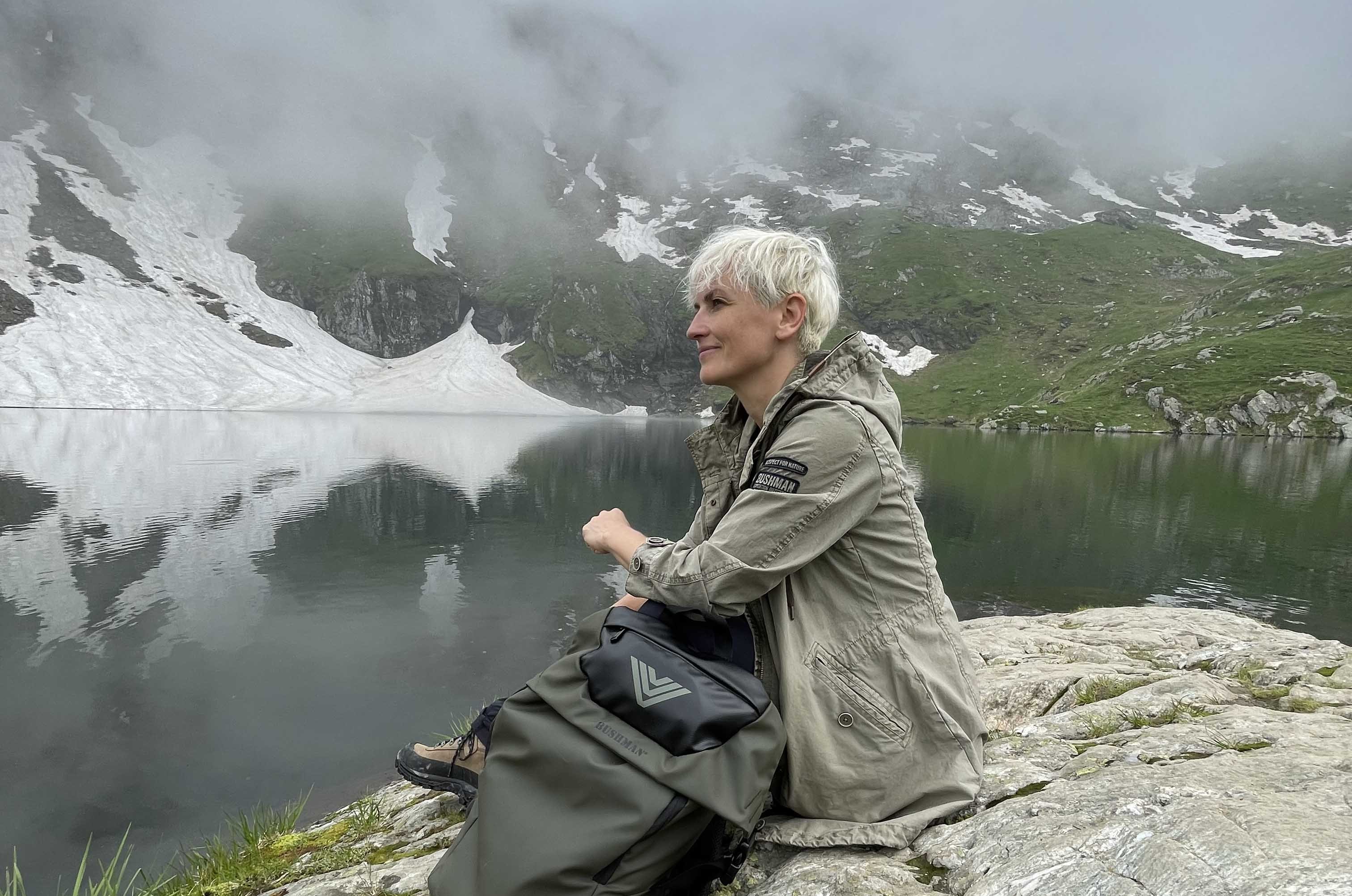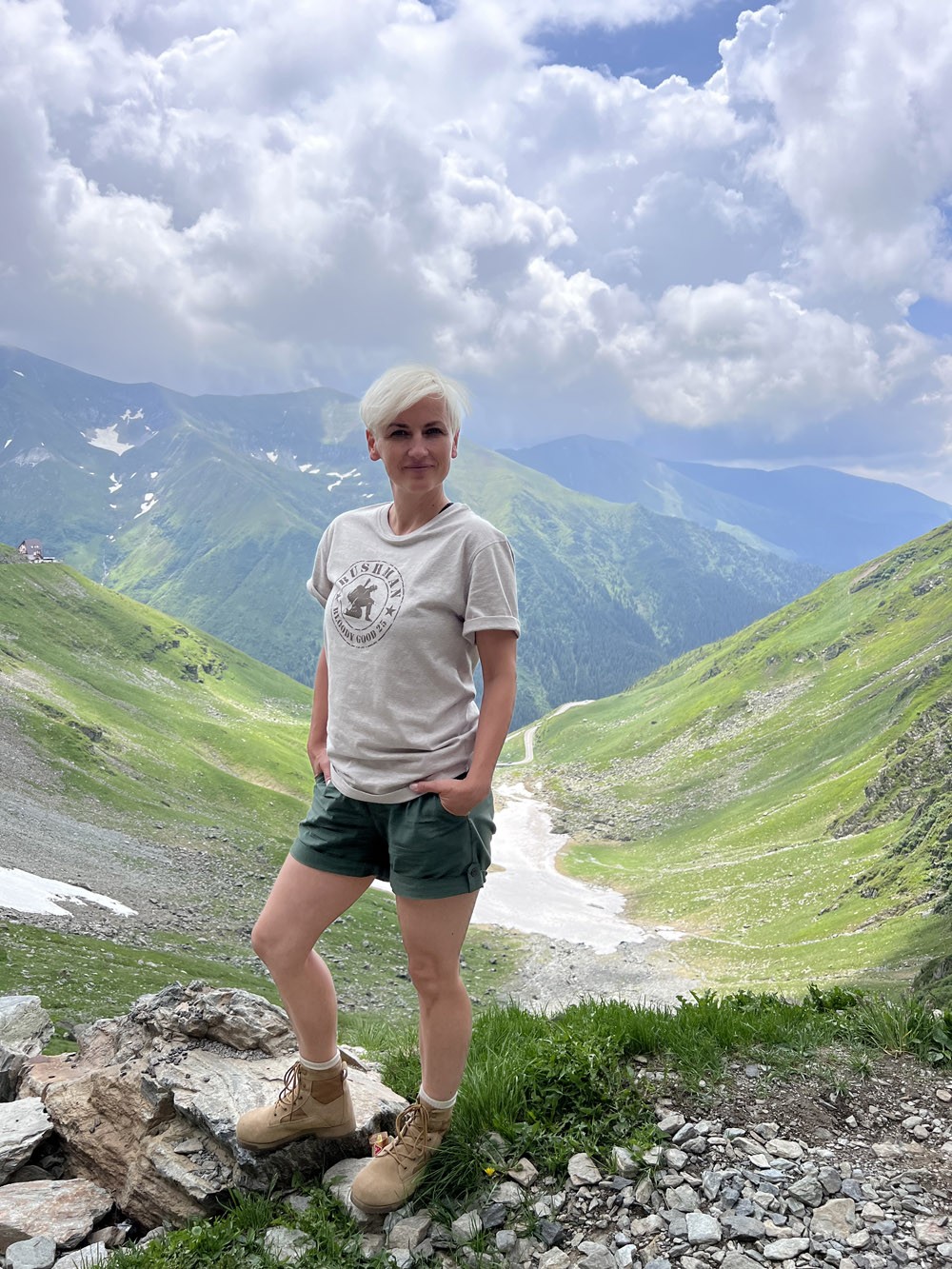



"Travelling means freedom and a return to myself," says BUSHMAN ambassador and traveller Lenny Trčková.
Dec 3, 2025
Lenny Trčková, a well-known Czech presenter, dramatist, screenwriter, and holistic coach, is also a traveller who is afraid of practically nothing. But travelling means more to her than just checking off tourist destinations: it‘s a space of freedom, an opportunity to be alone with herself, soak up a different culture, and welcome unexpected changes. How has spontaneity influenced her travels around the world? What is a "somatic journey"? And which BUSHMAN piece would she definitely not go into the field without?
Lenny, you say yourself that you are a "traveller in body and soul." But what does "travelling" mean to you? And does its meaning change with each new destination you visit?
For me, travelling mainly means freedom and time when I can be with myself. With who I am, without distractions, influences, obligations, and demands from those around me. And I really need that. I also feel that it is important for me to absorb and get to know other regions and cultures. It enriches me and brings many other dimensions to my life. I like meeting new people, getting to know the locals, and wherever I go, I always have some unexpected experiences and countless opportunities to step out of my comfort zone. I often seek these things out on purpose. (laughs)
From this, I gather that you like to be surprised along the way and don't necessarily need to have "everything according to plan." Has there ever been a moment when spontaneity changed the direction of your journey?
That's exactly how I set out on one of my most cherished journeys. I had just broken up with my boyfriend and needed to get away somewhere. I chose Colombia (I don't even know why!). Everyone tried to talk me out of it, saying that I couldn't go there alone and that it was dangerous. Overall, the trip was somehow strangely difficult to "process." But I was pressed for time and needed to decide on a destination. And then Cuba came my way. I hadn't planned it at all, but I immediately fell in love with the idea.
So I just bought a ticket and didn't think about it anymore. The plane landed at one o'clock in the morning, and I remember my first breath there perfectly. I'll never forget that smell. It was a mixture of dry grass, flowers, and moisture. And I fell in love. It was dark everywhere, only black shadows moved on the streets, there were almost no lights on, and my phone wasn't working... In the end, everything turned out fine. But my entire trip and stay would be a long story to tell, because it was one story after another. Cuba has remained in a special place in my heart. Just like Cambodia and Burma.
You have a relatively broad scope, you also work as a holistic and somatic coach, so you work with the body, the nervous system, and inner experiences. Does this focus also reflect in your travels?
Yes, I draw a lot from my travels and consciously absorb everything with all my senses, and I always need to integrate everything I experience into myself and my system. That's why I don't like fast marathons and the rush to see everything in one place. I'm more of a "user" and "experiencer." I need to enjoy beautiful views, feel the sea or ocean air, admire the colours and scents of flowers, look at the landscape, and experience it through myself.
In the spring, you are planning a so-called "somatic journey" to Bhutan. Could you explain what exactly a "somatic journey" means and why you chose Bhutan for this purpose?
Bhutan has been my love for twenty-five years. I've been waiting for it for so long! It has eluded me until now, but I won't let it get away again. This country suits me best for a "somatic journey." The somatic journey is all about experiencing through the body and all our senses. It is about perceiving what we see, hear, or feel through the body. Imagine, for example, that you are looking at a beautiful green landscape, slowly letting your eyes wander from left to right, and you find something that catches your attention and let it affect you for a moment. Then try to find out how your body feels when you look at that thing, tree, or perhaps the sea. It's all about finding sensations that you feel physically. Maybe it will be deep breathing, warmth in your stomach, or you may notice that your shoulders are suddenly relaxed. Or maybe your thoughts will relax...
In exactly the same way, it is possible to explore other senses such as hearing—what we hear in the distance and what is close to us—or even our boundaries and how strong they are. Or a feeling of security and how we currently feel. There is simply a lot to explore, and it's all about curiosity and mindfulness.
Even after such a short exercise, you will suddenly find that you feel good and can heal your nervous system at the same time. And the more you tune into these subtle signals from your body, the better you will understand yourself. The somatic path is not about strenuous exercise, but about a gentle return to yourself. And I dare say that during those twelve days in Bhutan, people will learn more about themselves than they may have ever imagined. As a bonus, we will enjoy breathtaking views in the heart of the Himalayas, Buddhist monasteries, smiling people, and, I believe, the omnipresent national happiness.
When exactly are you planning to go on this trip?
We will be going next April in a small group of up to 12 people, so it won't be a "mass event." I want us all to really experience it. And above all, I want those who want to treat themselves to this trip to come together. I notice not only in my clients, but also in my surroundings, how much time we devote to everyone and everything else except ourselves. We usually put ourselves last.
Travelling—especially to more remote corners of the world—also opens our eyes to other cultures. Have you ever had an "unexpected cultural lesson"?
I don't recall. I always try to respect local customs, and I follow local rules, especially in Arab countries. To be honest, I feel better that way myself, and I also notice that the locals appreciate it and are then more open to conversation or contact.
Outdoor activities, whatever they may be, often present challenges – changes in weather, difficult terrain, uncomfortable conditions. What was your most challenging moment as a traveller and how did you manage to overcome it?
I am usually prepared for these challenges in advance, but I remember one that was slightly uncomfortable. It was during my trip to Sri Lanka. It's usually warm everywhere there, and you don't need much. But there was one place near Nuwara Eliya where my friend and I were freezing in an unheated room, wrapped in all the blankets and clothes we had, and we couldn't even sleep because we were shivering so much. We stayed awake all night, just waiting for the sun to come up and warm us up a little. I really wasn't prepared for that. But my reward was waking up to beautiful greenery, all-encompassing silence, and fresh morning air. So I actually have fond memories of it.
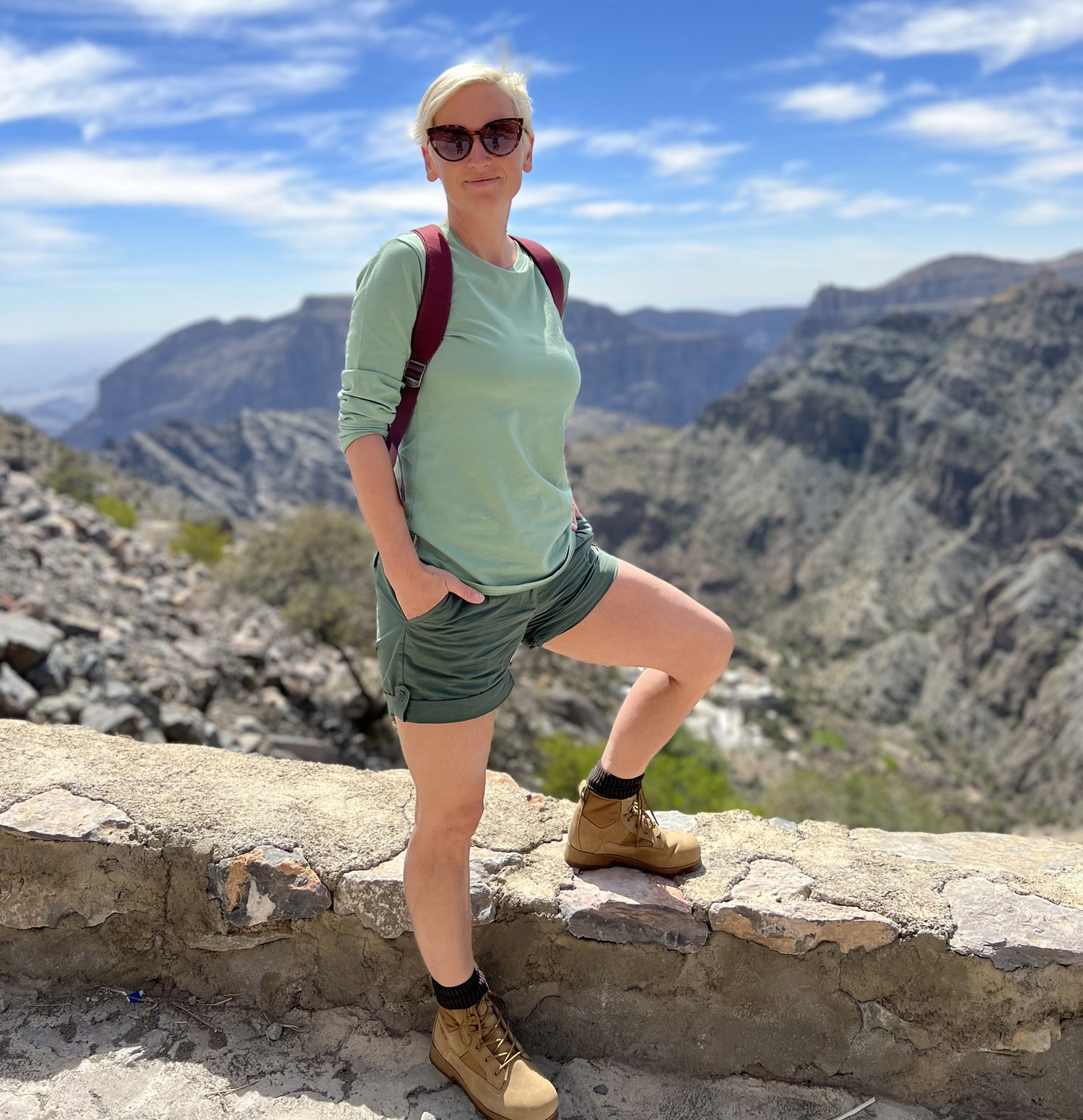
When you're on the road—whether in the city or in the countryside—what are your "backpack essentials"? What one thing would you never forget—and why?
First and foremost, I need a good backpack. It's important to me because I'm constantly on the move. Ideally, it should also be waterproof. I also need good socks and the right shoes for the activity I want to do. I also carry a knife, disinfectant, tissues, and deer tallow, which I can't do without. Water and a protein bar are also a must, because I really can't stand being hungry.
You are a BUSHMAN ambassador, so I would be interested to know if there is a specific item that you swear by – and that has perhaps even "saved" you in the field?
I'll repeat myself, but it's a backpack. Bushman has backpacks with lots of pockets that can hold everything I need. One of them has travelled thousands of miles with me. I also love the seat pad, which has saved me many times when I wanted to rest in places where it wasn't ideal to just sit on the ground. I also adore my thermos flask for tea, which travels with me everywhere and I take it with me on every hike. And Cruizer shoes! They are my favorites. They are like a tank because I can walk over rocks and mud with them and my feet stay dry. Plus, they are just the right weight and I know I can rely on them.
Travelling and exploring distant lands often appeals to many people, but they are afraid to take that first step. Based on your experience, do you have any recommendations on how to overcome your fears and just go for it?
I would say that the most important thing is to buy a ticket and be open to new experiences. Because once you have a ticket, it's hard to back out of the plan. The ticket, insurance, and natural curiosity usually force you to take care of everything else and set off on your journey. Then all you have to do is surrender yourself fully to life, let it lead you where it will, and trust that whatever happens along the way is for your highest good.
For me, travelling mainly means freedom and time when I can be with myself. With who I am, without distractions, influences, obligations, and demands from those around me. And I really need that. I also feel that it is important for me to absorb and get to know other regions and cultures. It enriches me and brings many other dimensions to my life. I like meeting new people, getting to know the locals, and wherever I go, I always have some unexpected experiences and countless opportunities to step out of my comfort zone. I often seek these things out on purpose. (laughs)
From this, I gather that you like to be surprised along the way and don't necessarily need to have "everything according to plan." Has there ever been a moment when spontaneity changed the direction of your journey?
That's exactly how I set out on one of my most cherished journeys. I had just broken up with my boyfriend and needed to get away somewhere. I chose Colombia (I don't even know why!). Everyone tried to talk me out of it, saying that I couldn't go there alone and that it was dangerous. Overall, the trip was somehow strangely difficult to "process." But I was pressed for time and needed to decide on a destination. And then Cuba came my way. I hadn't planned it at all, but I immediately fell in love with the idea.
So I just bought a ticket and didn't think about it anymore. The plane landed at one o'clock in the morning, and I remember my first breath there perfectly. I'll never forget that smell. It was a mixture of dry grass, flowers, and moisture. And I fell in love. It was dark everywhere, only black shadows moved on the streets, there were almost no lights on, and my phone wasn't working... In the end, everything turned out fine. But my entire trip and stay would be a long story to tell, because it was one story after another. Cuba has remained in a special place in my heart. Just like Cambodia and Burma.
You have a relatively broad scope, you also work as a holistic and somatic coach, so you work with the body, the nervous system, and inner experiences. Does this focus also reflect in your travels?
Yes, I draw a lot from my travels and consciously absorb everything with all my senses, and I always need to integrate everything I experience into myself and my system. That's why I don't like fast marathons and the rush to see everything in one place. I'm more of a "user" and "experiencer." I need to enjoy beautiful views, feel the sea or ocean air, admire the colours and scents of flowers, look at the landscape, and experience it through myself.
In the spring, you are planning a so-called "somatic journey" to Bhutan. Could you explain what exactly a "somatic journey" means and why you chose Bhutan for this purpose?
Bhutan has been my love for twenty-five years. I've been waiting for it for so long! It has eluded me until now, but I won't let it get away again. This country suits me best for a "somatic journey." The somatic journey is all about experiencing through the body and all our senses. It is about perceiving what we see, hear, or feel through the body. Imagine, for example, that you are looking at a beautiful green landscape, slowly letting your eyes wander from left to right, and you find something that catches your attention and let it affect you for a moment. Then try to find out how your body feels when you look at that thing, tree, or perhaps the sea. It's all about finding sensations that you feel physically. Maybe it will be deep breathing, warmth in your stomach, or you may notice that your shoulders are suddenly relaxed. Or maybe your thoughts will relax...
In exactly the same way, it is possible to explore other senses such as hearing—what we hear in the distance and what is close to us—or even our boundaries and how strong they are. Or a feeling of security and how we currently feel. There is simply a lot to explore, and it's all about curiosity and mindfulness.
Even after such a short exercise, you will suddenly find that you feel good and can heal your nervous system at the same time. And the more you tune into these subtle signals from your body, the better you will understand yourself. The somatic path is not about strenuous exercise, but about a gentle return to yourself. And I dare say that during those twelve days in Bhutan, people will learn more about themselves than they may have ever imagined. As a bonus, we will enjoy breathtaking views in the heart of the Himalayas, Buddhist monasteries, smiling people, and, I believe, the omnipresent national happiness.
When exactly are you planning to go on this trip?
We will be going next April in a small group of up to 12 people, so it won't be a "mass event." I want us all to really experience it. And above all, I want those who want to treat themselves to this trip to come together. I notice not only in my clients, but also in my surroundings, how much time we devote to everyone and everything else except ourselves. We usually put ourselves last.
Travelling—especially to more remote corners of the world—also opens our eyes to other cultures. Have you ever had an "unexpected cultural lesson"?
I don't recall. I always try to respect local customs, and I follow local rules, especially in Arab countries. To be honest, I feel better that way myself, and I also notice that the locals appreciate it and are then more open to conversation or contact.
Outdoor activities, whatever they may be, often present challenges – changes in weather, difficult terrain, uncomfortable conditions. What was your most challenging moment as a traveller and how did you manage to overcome it?
I am usually prepared for these challenges in advance, but I remember one that was slightly uncomfortable. It was during my trip to Sri Lanka. It's usually warm everywhere there, and you don't need much. But there was one place near Nuwara Eliya where my friend and I were freezing in an unheated room, wrapped in all the blankets and clothes we had, and we couldn't even sleep because we were shivering so much. We stayed awake all night, just waiting for the sun to come up and warm us up a little. I really wasn't prepared for that. But my reward was waking up to beautiful greenery, all-encompassing silence, and fresh morning air. So I actually have fond memories of it.
When you're on the road—whether in the city or in the countryside—what are your "backpack essentials"? What one thing would you never forget—and why?
First and foremost, I need a good backpack. It's important to me because I'm constantly on the move. Ideally, it should also be waterproof. I also need good socks and the right shoes for the activity I want to do. I also carry a knife, disinfectant, tissues, and deer tallow, which I can't do without. Water and a protein bar are also a must, because I really can't stand being hungry.
You are a BUSHMAN ambassador, so I would be interested to know if there is a specific item that you swear by – and that has perhaps even "saved" you in the field?
I'll repeat myself, but it's a backpack. Bushman has backpacks with lots of pockets that can hold everything I need. One of them has travelled thousands of miles with me. I also love the seat pad, which has saved me many times when I wanted to rest in places where it wasn't ideal to just sit on the ground. I also adore my thermos flask for tea, which travels with me everywhere and I take it with me on every hike. And Cruizer shoes! They are my favorites. They are like a tank because I can walk over rocks and mud with them and my feet stay dry. Plus, they are just the right weight and I know I can rely on them.
Travelling and exploring distant lands often appeals to many people, but they are afraid to take that first step. Based on your experience, do you have any recommendations on how to overcome your fears and just go for it?
I would say that the most important thing is to buy a ticket and be open to new experiences. Because once you have a ticket, it's hard to back out of the plan. The ticket, insurance, and natural curiosity usually force you to take care of everything else and set off on your journey. Then all you have to do is surrender yourself fully to life, let it lead you where it will, and trust that whatever happens along the way is for your highest good.
Next picture